

Responsible Consumption: How Our Purchasing Decisions Affect the Environment
Responsible Consumption: How Our Purchasing Decisions Affect the Environment
In a world where every purchasing decision has environmental and economic consequences, responsible consumption has emerged as a key practice for reducing the impact of our daily activities. This approach encourages us to reflect on what we consume, how the goods we purchase are produced, and what happens to the waste we generate after using them.
As part of World Responsible Consumption Day, observed every March 15, Vida Circular—a nonprofit organization dedicated to promoting sustainable practices and responsible waste management—highlights the role consumers play in driving positive changes in consumption patterns and environmental protection.
Responsible consumption and its impact on the environment
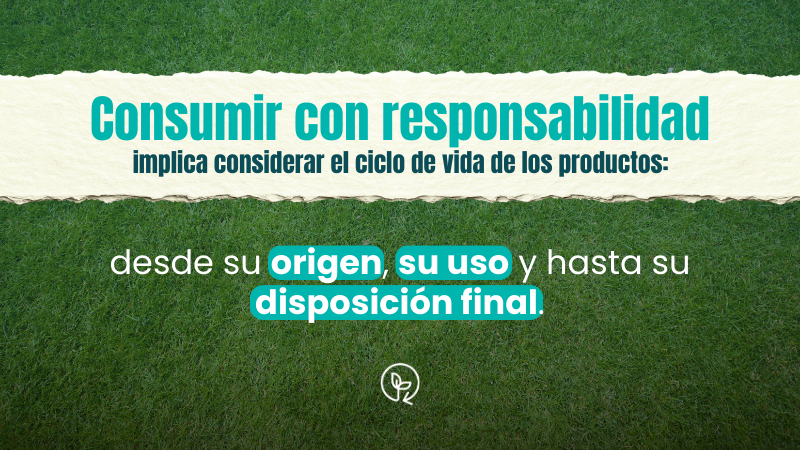
Responsible consumption involves adopting a consumer ethic based on informed decisions that take into account the environmental, social, and economic impact of each purchase. This means considering factors such as the origin of products, the materials used to make them, and how waste will be managed once the product has served its purpose.
Thinking before you buy helps reduce overspending and minimize waste. It also encourages a preference for products made from recyclable or reused materials, contributing to a more sustainable consumption model.
Consumers willing to support sustainable products
The Third Survey on Plastic Recycling Habits Among Mexicans 2025 shows a growing willingness among consumers to choose more sustainable options. According to the results, 76.7% of respondents said they would be willing to pay a little more for a product if it were offered in environmentally friendly packaging.
These figures reflect a shift in how consumers evaluate products, taking into account not only their usefulness or price, but also the environmental impact associated with their manufacture and disposal.
The survey also highlights that 64.9% of participants recycle plastic containers primarily to prevent pollution of the ocean and land, confirming the growing concern for the protection of ecosystems.
On the other hand, 18.5% of respondents said they recycle to make use of materials that still have value and can be reused in new production processes.
The role of information in consumer decisions
According to Vida Circular, access to reliable information is essential for people to make more informed purchasing decisions. Understanding the impact of the products we use enables us to adopt habits that contribute to the conservation of natural resources.
“Every consumer choice has an impact on the environment. That is why, at Vida Circular, we work to provide information and alternatives that enable people to make more informed decisions and move toward lifestyles that respect the limits of natural resources,” said Sandra Gazca, executive director of Vida Circular.
Initiatives that promote responsible consumption
Adopting a model of responsible consumption involves incorporating daily habits that help reduce environmental impact. These actions can be applied when purchasing products, using them, or deciding how to dispose of them at the end of their useful life.
- Assessing the necessity of each purchase helps prevent excessive consumption of products and reduces waste generation.
- Choosing products made from sustainable or recycled materials helps promote a more responsible consumption model.
- Checking labels and certifications helps identify products with more sustainable environmental features or production processes.
- Before throwing something away, you might consider alternatives such as reusing it, finding a new use for it, or trading it.
- Extending the lifespan of products such as clothing, shoes, electronics, and household items helps reduce the demand for new resources.
Responsible use of natural resources
Responsible consumption also means using natural resources thoughtfully. Small, everyday actions can help reduce our environmental impact and prevent the depletion of resources.
Some of the simplest ways to conserve resources include turning off the faucet when not in use, reducing energy consumption by using LED light bulbs, and unplugging electrical appliances that are not in use.
Likewise, choosing alternatives such as carpooling or prioritizing products made according to sustainability criteria can make a significant difference in protecting the environment.
An opportunity to reflect on our habits
World Responsible Consumption Day offers an opportunity to reflect on the impact of our everyday decisions and to recognize the responsibility that each person has as a consumer.
Adopting more mindful consumption habits not only helps reduce waste and protect natural resources, but also drives positive changes in production systems and the way products are designed.
Promoting responsible consumption means moving toward more sustainable lifestyles, where every purchasing decision becomes an opportunity to care for the environment and build a future that is more in harmony with the planet.